
Delving into the realm of Architectural design services cost breakdown, we uncover the intricate web of factors, costs, and strategies that shape this crucial aspect of architectural projects. From project scope to pricing structures, this topic offers a comprehensive view of what goes into determining the expenses of architectural design services.
As we navigate through the various components and considerations, a clearer picture emerges of how architects and clients can work together to optimize costs and achieve successful outcomes in their projects.
Factors Affecting Architectural Design Services Cost
When it comes to the cost breakdown of architectural design services, several factors play a crucial role in determining the overall expenses. Understanding these factors is essential for clients and architects alike to manage expectations and budget effectively.Project Scope:The scope of the architectural project is a significant factor that influences the cost.
Larger projects with extensive requirements and intricate designs will naturally incur higher costs compared to smaller, more straightforward projects. For example, a residential house design will typically cost less than a commercial building design due to the scale and complexity involved.Project Complexity:The complexity of the design and technical requirements can significantly impact the cost of architectural services.
Projects that involve unique or challenging design elements, specialized materials, or intricate structural considerations will require more time and expertise, leading to higher costs. A simple, minimalist design will generally be more cost-effective than a highly detailed, intricate design.Location:The location of the project can also affect the cost of architectural services.
Projects in urban areas with higher living costs and construction expenses may incur higher design fees compared to projects in rural or suburban areas. Additionally, projects in regions with specific building codes, regulations, or environmental considerations may require additional expertise and resources, impacting the overall cost.Materials:The choice of materials used in the architectural design can have a significant impact on the overall cost.
High-end, premium materials will naturally increase the cost of the project, while more budget-friendly options can help reduce expenses. Additionally, factors such as sustainability, durability, and availability of materials can also influence the overall cost of architectural services.By considering these factors and their implications on the cost breakdown of architectural design services, clients and architects can work together to create realistic budgets and achieve successful project outcomes.
Typical Cost Components in Architectural Design Services
When it comes to architectural design services, there are several typical cost components that play a crucial role in determining the overall cost. Understanding these cost components is essential for clients and architects alike to ensure transparency and effective budget management.
Design Fees
Design fees are the costs associated with the actual design work performed by the architect. This includes conceptual design, schematic design, design development, and construction documentation. Design fees are typically calculated based on the complexity of the project, the size of the space, and the experience of the architect.
Construction Documents
Construction documents are detailed drawings and specifications that Artikel the requirements for construction. These documents are essential for obtaining permits, bidding from contractors, and ensuring that the project is built according to the design. The cost of preparing construction documents can vary depending on the scope and complexity of the project.
Permits
Permits are required for any construction project to ensure that it complies with local building codes and regulations. The cost of permits can vary depending on the location of the project, the size of the construction, and the type of permits required.
It is essential to budget for permit costs to avoid delays and legal issues during the construction process.
Contractor Coordination
Contractor coordination involves working with contractors to ensure that the design is implemented correctly and within budget. This includes reviewing bids, negotiating contracts, and overseeing the construction process. The cost of contractor coordination can vary depending on the level of involvement required from the architect.
Pricing Structures for Architectural Design Services
In the world of architectural design services, pricing structures play a crucial role in determining how architects charge for their services. Different firms use various pricing models to suit their business goals and client needs. Let's explore the common pricing structures used by architectural firms and understand the differences between them.
Fixed Fee Pricing
Fixed fee pricing is when the architect charges a set amount for the entire project. This pricing structure is ideal for clients who have a clear project scope and want to know the total cost upfront. For example, a residential renovation project with a well-defined scope of work would be suitable for a fixed fee pricing model.
Hourly Rate Pricing
Hourly rate pricing involves charging clients based on the number of hours worked on the project. This model is beneficial when the project scope is unclear or likely to change throughout the design process. For instance, a client who needs ongoing consultation and design revisions might opt for an hourly rate pricing structure.
Percentage of Construction Cost Pricing
Percentage of construction cost pricing is when the architect's fee is calculated as a percentage of the total construction cost. This model aligns the architect's compensation with the project's scale and complexity. It is often used for large-scale projects like commercial buildings or high-end residential properties.
Value-Based Pricing
Value-based pricing takes into account the value that the architect's services bring to the client. Instead of focusing on hours or construction costs, this model considers the impact of the design on the client's business or lifestyle. For example, an architect designing a flagship store for a retail brand might use a value-based pricing structure to reflect the brand's increased revenue potential.These pricing structures offer flexibility and transparency to clients while allowing architects to fairly compensate for their expertise and creativity in architectural design services.
Strategies to Optimize Architectural Design Services Costs
Optimizing costs in architectural design services is crucial for both clients and architects. By implementing the right strategies, they can ensure that projects are completed within budget without compromising on quality.
Early Collaboration for Cost Optimization
One effective strategy to optimize architectural design costs is to encourage early collaboration between clients and architects. By involving all stakeholders from the beginning stages of the project, potential issues can be identified and addressed before they escalate, saving both time and money.
Clear Communication for Cost Savings
Clear communication is key to cost savings in architectural design services. When clients clearly communicate their needs and expectations, architects can deliver more accurate designs that meet the requirements without unnecessary revisions or delays. This helps in saving costs associated with rework and changes.
Value Engineering for Cost Efficiency
Implementing value engineering techniques can significantly optimize costs in architectural design services. By analyzing each component of the project and identifying opportunities for cost reduction without compromising quality, architects can deliver efficient designs that meet budget constraints.
Case Studies of Successful Cost Optimization Strategies
| Project | Optimization Strategy | Cost Savings |
|---|---|---|
| Residential Complex | Early collaboration with contractors | $100,000 saved through streamlined construction process |
| Commercial Office Building | Clear communication on material selection | 20% reduction in material costs |
| Public Park Design | Value engineering for landscape elements | 30% cost savings without compromising design aesthetics |
Final Conclusion
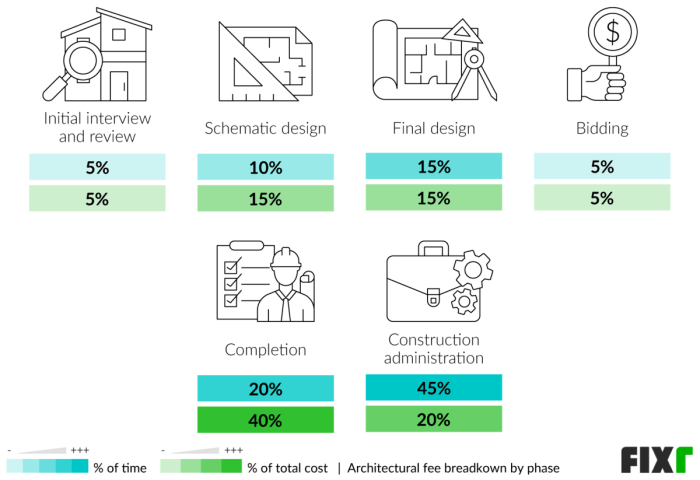
In conclusion, Architectural design services cost breakdown is a multifaceted landscape that demands attention to detail and strategic planning. By understanding the factors at play, breaking down the costs involved, and implementing effective strategies, both clients and architects can pave the way for successful and cost-effective architectural projects.
User Queries
What are some common factors that influence the cost breakdown of architectural design services?
Factors such as project scope, complexity, location, and materials can significantly impact the overall cost of architectural design services.
What are the typical cost components involved in architectural design services?
Design fees, construction documents, permits, and contractor coordination are some of the key cost components in architectural design services.
What are the different pricing structures commonly used by architectural firms?
Architectural firms commonly use fixed fee, hourly rate, percentage of construction cost, and value-based pricing models to determine their charges.
How can clients and architects optimize costs in architectural design services?
Early collaboration, clear communication, and value engineering are effective strategies that can help in optimizing costs in architectural design services.