
As Future-proof home designs by modern architects takes center stage, this opening passage beckons readers into a world crafted with good knowledge, ensuring a reading experience that is both absorbing and distinctly original. From incorporating sustainable features to integrating smart home technology and designing adaptable spaces, modern architects are revolutionizing the way we live in our homes.
Let's delve into the key elements that make these designs stand the test of time.
Elements of Future-Proof Home Designs
Incorporating key elements that modern architects use in future-proof home designs is crucial to ensuring sustainability, flexibility, and technology integration play a significant role in creating homes that are adaptable to future needs.
Sustainability
Sustainability is a key element in future-proof home designs, with architects focusing on eco-friendly materials, energy-efficient systems, and renewable energy sources. Examples of sustainable features include solar panels, green roofs, rainwater harvesting systems, and passive design strategies that maximize natural light and ventilation.
Flexibility
Flexibility in home designs allows for spaces to be easily adapted to changing needs over time. Open floor plans, movable partitions, and multi-functional furniture are common features that provide versatility and allow for customization as families grow or lifestyles evolve.
Technology Integration
Integrating technology into home designs is essential for future-proofing. Smart home systems that control lighting, heating, security, and appliances remotely are becoming increasingly popular. Energy management systems, home automation, and sustainable building materials like insulated concrete forms and high-performance windows are examples of how technology is used to enhance the efficiency and comfort of modern homes.
Sustainable Features in Modern Architecture
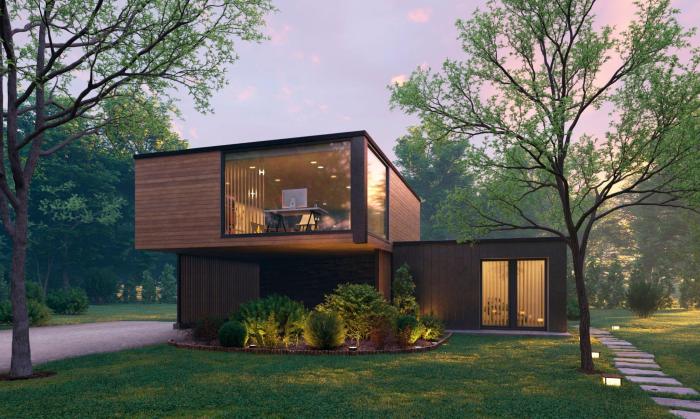
Modern architecture is increasingly incorporating sustainable features to create future-proof home designs that are eco-friendly and energy-efficient.
One of the key sustainable features commonly seen in modern architecture is the use of green roofs. Green roofs are covered with vegetation, providing insulation, absorbing rainwater, and reducing heat island effects in urban areas.
Green Roofs
Green roofs help to improve air quality, reduce energy costs by providing natural insulation, and extend the lifespan of the roof by protecting it from UV radiation and weathering.
Solar Panels
Solar panels are another popular sustainable feature in modern architecture. By harnessing the power of the sun, solar panels generate clean energy that can be used to power the home and reduce reliance on non-renewable energy sources.
Passive Heating/Cooling Systems
Passive heating and cooling systems utilize natural elements such as sunlight, shade, and ventilation to regulate the temperature inside the home. This reduces the need for mechanical heating and cooling systems, leading to lower energy consumption.
Energy efficiency and the use of eco-friendly materials are crucial in creating sustainable homes. By incorporating features like energy-efficient appliances, LED lighting, and sustainable building materials, modern architects can significantly reduce the environmental impact of residential buildings.
When comparing traditional home designs with modern sustainable architecture, it is evident that sustainable homes have a lower carbon footprint and contribute to a healthier environment. Additionally, the longevity of sustainable homes is often higher due to the use of durable materials and energy-efficient systems that require less maintenance over time.
Integration of Smart Home Technology
Modern architects are increasingly incorporating smart home technology into their future-proof designs to enhance functionality and efficiency. By integrating IoT devices, automated systems, and energy management tools, these homes are equipped with cutting-edge technology that not only improves the quality of life for residents but also contributes to long-term sustainability.
Benefits of Smart Home Technology in Future-Proof Designs
- Improved convenience and comfort for homeowners through automated systems that can be controlled remotely.
- Enhanced energy efficiency with smart thermostats, lighting controls, and appliances that can optimize energy usage.
- Increased security through smart locks, cameras, and sensors that provide real-time monitoring and alerts.
- Higher resale value and marketability due to the appeal of a fully integrated smart home.
Challenges and Considerations for Architects
- Compatibility issues between different smart devices and systems, requiring careful planning and integration.
- Data privacy and security concerns that need to be addressed to protect the personal information of homeowners.
- Upgradability and future-proofing of smart technology to ensure that homes remain technologically relevant over time.
- Initial cost and investment required for installing smart home technology, which may be a barrier for some homeowners.
Adaptable Spaces and Flexible Layouts
Adaptable spaces and flexible layouts play a crucial role in future-proof home designs, allowing homeowners to easily adjust their living spaces to meet changing needs and trends. Architects incorporate innovative concepts to create versatile environments that can evolve over time.
Multi-Functional Rooms
Multi-functional rooms are a key feature in future-proof home designs, serving multiple purposes to maximize space efficiency. For example, a home office can also double as a guest bedroom with a wall bed or convertible furniture. This versatility ensures that spaces can adapt to different uses without compromising on functionality.
Convertible Furniture
Convertible furniture, such as expandable tables, folding chairs, and storage ottomans, are essential in creating adaptable spaces. These pieces allow for easy transformation of rooms based on specific requirements, providing flexibility without sacrificing style. By integrating convertible furniture into the design, architects optimize space utilization and enhance the overall functionality of the home.
Modular Design Concepts
Modular design concepts involve using interchangeable components that can be rearranged or added to create custom layouts. For instance, modular walls or partitions can be used to divide a large open space into smaller rooms when needed. This approach offers homeowners the flexibility to modify their living environment according to their preferences, making the home more adaptable to evolving needs.
Aesthetics vs. Practicality
When designing adaptable spaces, architects must strike a balance between aesthetics and practicality to ensure long-term usability. While it's important to create visually appealing interiors, functionality should not be compromised. Incorporating adaptable features seamlessly into the overall design enhances the aesthetic value of the space while maintaining its practicality and versatility.
Final Conclusion
In conclusion, Future-proof home designs by modern architects offer a glimpse into the future of living, where sustainability, technology, and flexibility converge to create homes that are not just structures, but dynamic living spaces. By embracing innovation and forward-thinking design principles, these architects are paving the way for a more resilient and adaptable living environment.
The future is now, and it looks brighter and more sustainable than ever before.
Detailed FAQs
How do modern architects ensure long-term sustainability in future-proof home designs?
Modern architects ensure long-term sustainability by incorporating energy-efficient materials, passive heating/cooling systems, and smart home technology to reduce environmental impact and increase efficiency.
What are some examples of innovative materials used in modern future-proof homes?
Examples of innovative materials include recycled steel, bamboo flooring, and insulated concrete forms, which contribute to sustainability and durability in future-proof home designs.
How do adaptable spaces and flexible layouts enhance the usability of future-proof homes?
Adaptable spaces and flexible layouts allow future-proof homes to accommodate changing needs and trends, providing versatility and longevity in design that caters to evolving lifestyles.